


Infectious diseases in the nineteenth century.
Cholera.
Cholera was one of many contagious diseases which killed people in the nineteenth century. Great Britain experienced two Cholera epidemics in the 1800s. Cholera bacteria (Vibrio cholerae) is transmitted by water or food which has been contaminated with the faeces of people who have the disease. Symptoms include severe diarrhoea and dehydration, which can lead to shock and death if left untreated.
The Rector of Camerton, Somerset kept a diary. His entry for October 3rd 1830 dealt with an outbreak of cholera in Paulton. Revd Skinner tells how the local doctor, Curtis, did not see the need to take any precautions against the spread of disease.
“Curtis says that he finds bleeding the most efficacious remedy and says he is pretty confident he can stop it if called in at the first: but it seems that out of nine cases, the whole perished under his management and that of Flower and Baynton of Radstock, so I for one should have little confidence on their skill. if it comes to us I suppose we must send for some of these worthies, but perhaps we may as well let it alone.”
Revd Skinner explains what measures the villagers took to prevent the spread of the disease.
“I am happy to hear the common people, now the danger is come to their doors, begin to take some precaution such as whitewashing their houses and purchasing camphor upwards of a pound having been sold in one day at the shop in Camerton, They also burn juniper which grows in quantities under Faulkland Knoll.”
Many people believed that bad odours carried disease into their houses and their bodies, and complaints to the authorities were made about the sewer smells infiltrating homes.
He was also clear of how the disease came to the parish.
“...vagabond match seller from Bath conveyed it to the house where he was taken for a night's lodging and immediately conveyed the infection to the household and to others. He was buried in his clothes the following morning and those who died are buried in a piece of ground without funeral ceremony”
Dr Curtis was criticised for his ineffective treatment as he believed blood letting was the correct action. Most patients died of dehydration and should have been treated with lightly salted water, letting blood added to the dehydration. Giving the patient water to drink would also have accelerated the disease if it was unboiled and from the same contaminated source that was causing the problem.
Revd Skinner was probably well aware of the lack of qualifications of the local doctors for although in 1815 the Society of Apothecaries had been given the right to examine and licence apothecaries after a compulsory apprenticeship, by 1840 only a third of those practicing medicine had the qualification. Neighbours would rely upon each other for assistance and doctors would be called only once all home remedies had failed or when the patient was close to death. It was not surprising that folklore and age-
In the country areas the cottages were cramped with large families and poor sanitation. Most cottages had earth closets which had to be “dug out” once or twice a year the waste being heaped up attracting flies and disease the stench while the “digging out” was being done must have been all evasive. Great care would have been needed to ensure that the water supply was well clear of the dung heaps.Our Bray ancestors came from Cornwall. There is a good description of Cornish mining cottages on the Cornish Mining site which includes this quote about Camborne the home of our RULE ancestors.
“In Camborne I was taken to a row of thatched cottages, each consisting of only two dark and low rooms, and all of which had no privies, and no system of drainage whatever, the inmates throwing everything either into a small back yard or common dust heap in the street."
A second quote on that site states that in Pain an Gwarry the 133 houses had only 11 privies between them and that the wells were “contaminated with sewage from overflowing communal cess-

Cholera in Paulton.
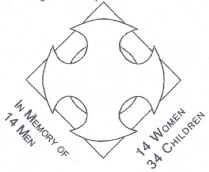
Paulton, Somerset, was the home of our BULL ancestors. There are two memorials in the churchyard of Holy Trinity. One commemorates an outbreak of "Asiatic Cholera" in 28 Sep -
Eve BULL was buried 10 Oct 1832 aged 5 years. No known connection with our family.
Joyce BULL [2664] was buried 26 Oct 1832 aged 15 years
Jacob BULL [2884] was buried 2 Nov 1832 age 5 years
Dinah BULL nee WATTS [2878] (mother of Jacob) was buried Nov 10 1832 also of Cholera
The entries for these in the parish register are marked with C and Cholera is written in the margin.

Rural Oxfordshire did not avoid the outbreak Thomas [10342] and Sarah FENNIMORE [10348] together with their seventh child Joseph [10349] were all buried between August 9th and 12th 1832 in Wendlebury..
Although these cholera instances were bad it should be remembered that in 1832 more people died of tuberculosis than cholera. The disease first appeared in the port of Sunderland and spread out to the whole country. By May and June there were riots in Liverpool, when people attacked the doctors and hospitals and clashed with the police. It was the fear of cholera and public hysteria that lead to great improvements in public health provisions.

Other infectious diseases.
Smallpox was declining during the nineteenth century as more people were vaccinated. Edward Jenner had developed vaccination against small pox in 1796
Isaac GRUNDY [5181] was the son of William and Martha and was baptised in Childrey 20 July 1806.The parish records also records that he was born on June 20th 1806 and vaccinated on February 4th 1807. At the bottom of the page was this note:-
“In the Year 1802 many People in this Parish were carried off by the Small Pox: & all the Inhabitants, down to Mary Turner (May 6 1802) were inoculated. The Small Pox being now in the Neighbourhood; it is propos'd to vaccinate those who have been born since. And Prejudices against this Institution existing amongst the Ignorant I deem it expedient to mark here a star by the Letters I & V those who adopt these several Prevention.
James Beaver Rector. Feby 4 1807”
Typhus is carried by body lice which were common in areas in which people live in overcrowded, dirty conditions, with few opportunities to wash themselves or their clothing.
Epidemic typhus causes fever, headache, weakness, and muscle aches. It also causes a rash composed of both spots and bumps. The rash starts on the back, chest, and abdomen, then spreads to the arms and legs. The worst types of complications involve swelling in the heart muscle or brain. Without treatment, this type of typhus can be fatal.
Three children of James and Charlotte GILES nee PARSLEY who lived in Thrupp died of typhus and were buried within 5 days of each other.
Pheobe Ann GILES [12014] buried 24 October 1868 in Kidlington
Julia Mary GILES [12015] buried 26 October 1868 in Kidlington
William GILES [12013] buried 29 October 1868 Kidlington
